

Selling luxury properties in South Africa’s top markets – Cape Town, Sandton, and Umhlanga – requires more than blueprints. High-quality 3D rendering has become an essential tool for developers to attract affluent buyers by creating lifelike visuals of properties before construction begins. These renders showcase every detail, from marble interiors to ocean-facing terraces, helping buyers visualise their investment and developers secure early sales. Here’s why it matters:
- Why it’s important: Traditional 2D plans fail to connect with high-end buyers. Photorealistic 3D renders bring properties to life, creating an emotional connection and building trust.
- Regional focus: Cape Town highlights scenic backdrops like Table Mountain; Sandton emphasises urban sophistication; Umhlanga focuses on relaxed beachfront living.
- Techniques used: Advanced lighting (ray tracing, global illumination), accurate materials (marble, wood), and immersive tools (360° tours, photomontages) make these renders stand out.
- Impact: Developers often sell units off-plan, avoiding costly showrooms and ensuring strong returns.
3D rendering isn’t just about visuals – it’s a powerful sales strategy for South Africa’s competitive luxury property market.
Casale Residence in Los Angeles | Ultra-Luxury 3D Home Animation
sbb-itb-f5a6292
Regional Luxury Market Requirements
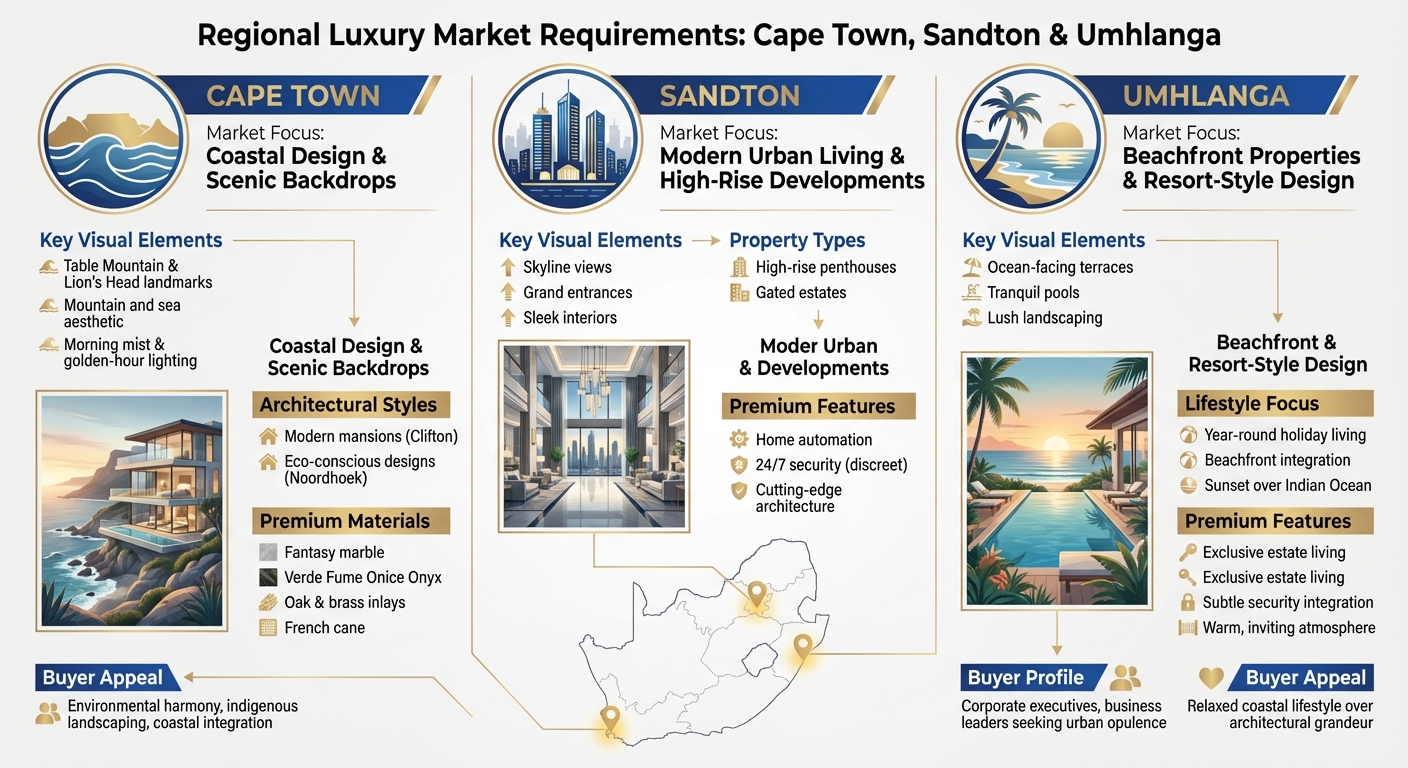
South Africa Luxury Property Market Comparison: Cape Town vs Sandton vs Umhlanga
South Africa’s luxury property markets call for tailored visual strategies that reflect the unique character of each region. In Cape Town, the focus is on dramatic mountain and ocean vistas. Sandton demands visuals that exude urban sophistication, while Umhlanga emphasises coastal living with a resort-style elegance. Understanding these distinctions is crucial to creating visuals that resonate with high-end buyers. Let’s dive into the specific visual needs of these regions.
Cape Town: Coastal Design and Scenic Backdrops
Cape Town’s luxury property market thrives on its iconic "mountain and sea" aesthetic. Visuals need to incorporate landmarks like Table Mountain or Lion’s Head, showcasing how the architecture blends seamlessly with its stunning coastal surroundings. Tools like 3D photomontage are particularly effective here, allowing developers to place proposed buildings into high-resolution site photographs, demonstrating harmony with the environment.
Cape Town’s diverse architectural styles also play a role. From the sleek, modern mansions of Clifton to the eco-conscious designs of Noordhoek, renders should reflect the region’s variety while capturing its natural elements like morning mist or golden-hour lighting. Jon Case, Director at ARRCC, highlights the evolving design trends:
"Classical wall detailing has been given new life with a contemporary colour pallet introducing moody greys, deep blues and textured green finishes".
Material details are equally important. High-quality renders must accurately depict luxury finishes like Fantasy marble, Verde Fume Onice Onyx, oak, brass inlays, and French cane. Incorporating indigenous landscaping elements not only enhances the visual appeal but also reassures eco-conscious buyers of the property’s environmental sensitivity.
Sandton: Modern Urban Living and High-Rise Developments
In Sandton, often referred to as Johannesburg’s economic hub, the luxury market revolves around urban opulence and sophistication. This area attracts corporate executives and business leaders who value visuals that reflect their elevated status. Here, renders should focus on grand entrances, sleek interiors, and modern conveniences like home automation and discreet 24/7 security.
"In a bustling city like Johannesburg, where the real estate market is highly competitive, villa renders offer a distinct advantage… helping potential buyers emotionally connect with a property." – PropertyRender
High-rise penthouses and gated estates dominate this market. Renders must highlight cutting-edge architectural design while integrating views of Sandton’s skyline, which often serves as a key selling point. Adam Court from OKHA notes:
"The character of the furnishings throughout is not achieved through ornamentation but… using clear articulation, with scale playing an important role".
Umhlanga: Beachfront Properties and Resort-Style Design
Umhlanga’s luxury market thrives on the appeal of coastal living. Visuals here should focus on ocean-facing terraces, tranquil pools, and lush landscaping that evoke a sense of relaxed, year-round holiday living. Unlike Cape Town’s dramatic landscapes or Sandton’s urban flair, Umhlanga’s visuals need to create a warm and inviting atmosphere.
Buyers in this region are drawn to properties that integrate seamlessly with the beachfront environment. The emphasis is less on architectural grandeur and more on lifestyle – renders should evoke the experience of waking up to the sound of waves or enjoying a sunset over the Indian Ocean. While security remains a priority, it should be subtly incorporated into the visuals, blending with the overall theme of exclusive estate living.
These regional distinctions guide the rendering techniques used to create visuals that align perfectly with the expectations of each market’s affluent buyers.
3D Rendering Techniques for Photorealistic Luxury Visuals
Designed specifically for South Africa’s luxury market, these techniques turn renders into powerful marketing assets. Achieving photorealistic visuals requires a deep understanding of light, materials, and composition to evoke emotion and create impact. The distinction between a basic render and one that truly sells a luxury penthouse lies in the finer details. Here’s how digital models are transformed into visuals that rival professional photography.
Advanced Lighting Methods
Lighting is the backbone of photorealistic rendering. Two standout techniques are Ray Tracing and Global Illumination (GI). Ray tracing mimics the behaviour of individual light rays, creating crisp reflections on glass facades and realistic refractions through water features. Global illumination, on the other hand, calculates how light bounces between surfaces – like sunlight reflecting off a polished marble floor and onto nearby walls – giving the scene a natural, dynamic feel.
| Technique | Primary Function | Visual Impact |
|---|---|---|
| Ray Tracing | Simulates individual light rays | Produces sharp, realistic reflections and refractions in glass and metal |
| Global Illumination | Calculates indirect light bounces | Fills spaces with soft, natural light, avoiding flat or dull interiors |
| Wall Washing | Uniformly lights vertical surfaces | Highlights wall textures and enhances spatial perception |
| Grazing | Directs light at sharp angles | Emphasises texture depth, ideal for stone or brick details |
Another essential method is Image-Based Lighting (IBL), which uses High Dynamic Range Images (HDRI) to replicate real-world ambient lighting conditions. For South African properties, tools like V-Ray‘s Sun/Sky system allow precise control over how sunlight interacts with spaces – whether it’s morning light streaming through a Camps Bay villa or golden-hour tones highlighting a Sandton penthouse.
Robert Hoshyla, a Partner at Orsman Design, summarises this approach:
"Lighting is about using the home as a canvas, calling attention to the life that happens inside and accentuating the home’s most exciting features".
By blending cool natural light from windows with warm artificial lighting from fixtures, designers create depth and add visual interest. Strategic use of shadows brings contrast and dimension, ensuring the space feels alive and inviting. Once lighting is perfected, the focus shifts to material accuracy.
Texturing and Material Accuracy
Luxury buyers demand to see every intricate detail – from the natural veining in marble to the fine grain of premium wood. High-end renders incorporate CGI replicas of materials specified by architects, ensuring what buyers see in the visuals matches what they’ll experience in reality. This level of detail transforms static floor plans into immersive experiences, helping potential buyers envision their future lives in the space.
In competitive property markets like Sandton and Cape Town, accurate material representation is critical – especially for off-plan developments where buyers are asked to commit before construction begins. Developers often create interior mood boards tailored to specific buyer profiles, ensuring textures and finishes align with expectations. This attention to detail often pays off, with properties marketed through hyper-realistic renders securing reservations even before ground is broken.
Camera Angles and Visual Composition
The right camera angle can turn a technical drawing into an emotional experience. Aerial and elevated shots are perfect for showcasing large developments and their surroundings, whether it’s Cape Town’s coastal views or Sandton’s urban skyline. Photomontages, which seamlessly blend renders with real site photography, provide a clear sense of how a property integrates with its environment.
For luxury properties, close-up detail shots capture the essence of high-end features, such as grand entrances, intricate joinery, or bespoke lighting. Meanwhile, human-eye perspectives allow viewers to picture themselves in the space, whether it’s standing on a balcony overlooking the ocean or cooking in a sleek, modern kitchen.
Immersive 360° panoramas and animated walk-throughs offer a cinematic experience, making them especially appealing to international investors. As one expert from Property Studios aptly put it:
"A lifelike CGI is worth a thousand empty rooms".
Ultimately, every composition should reflect the lifestyle being marketed. In Umhlanga, this might involve framing ocean views and outdoor entertainment areas, while in Sandton, it could focus on sophisticated interiors and striking cityscapes. The goal is not just to showcase the property but to make buyers feel what life there could be like. Through these technical choices, developers craft visuals that resonate emotionally and leave a lasting impression.
Using 3D Rendering in Luxury Property Marketing
Advanced 3D rendering techniques are reshaping how luxury properties are marketed in South Africa. These visual tools are not just about aesthetics – they play a pivotal role in engaging buyers and driving off-plan sales in areas like Cape Town, Sandton, and Umhlanga. By seamlessly integrating into broader marketing strategies, photorealistic renders take potential buyers on a journey – from initial curiosity to a final purchase decision. Let’s explore how these tools create comprehensive marketing packages and enhance buyer confidence.
Building Complete Marketing Packages
A well-rounded marketing package often includes CGI site plans, detailed 3D floor plans, and photomontages. Each of these assets highlights different aspects of a property, showcasing everything from communal spaces to sleek, modern high-rises.
- CGI site plans visually map out communal areas, helping buyers understand the layout and flow of the development.
- 3D floor plans go a step further, incorporating interior design features and landscaping to give buyers a holistic view of the property’s potential.
- Photomontages merge 3D models with real-world site photographs, whether it’s a coastal scene in Camps Bay or an urban skyline in Sandton.
Timing is everything when it comes to these assets. Many successful projects commission CGIs as soon as planning approval is secured, ensuring they can capitalise on the pre-construction phase to attract early reservations. These visuals are then used across various platforms, including bespoke brochures, interactive online listings, and CRM-integrated plot locators. As 3D Rendering South Africa puts it:
"In business, offering potential clients a visually powerful 3D rendering could mean the difference between establishing a partnership and setting you apart from competitors or not".
Improving Buyer Engagement and Decision-Making
Beyond creating visually stunning marketing packages, high-quality renders significantly improve buyer engagement. They simplify the sales process, cutting down on the need for frequent site visits or lengthy explanations. Features like 360° panoramic virtual tours are particularly valuable, allowing international investors to explore luxury properties remotely – an essential capability for affluent buyers making decisions from afar.
This immersive experience builds an emotional connection with the property in a way that static images simply can’t. PropertyRender explains:
"By providing a realistic and immersive experience, villa renders help potential buyers emotionally connect with a property, increasing the likelihood of a sale".
Buyers also gain confidence when they see accurate depictions of planned fixtures, fittings, and bespoke furniture. These visuals don’t just serve marketing purposes – they’re a practical tool for contractors, ensuring the finished product matches the envisioned design. In South Africa’s luxury property market, this alignment between vision and reality plays a key role in turning interest into firm commitments.
3D Rendering Services South Africa for Luxury Properties
Key Features and Benefits
With over two decades of experience and a track record of completing over 1,200 projects since 2001, 3D Rendering Services South Africa has built a reputation for excellence, boasting a 99% job satisfaction rate and a 94% client return rate. Their services are specifically designed to cater to the needs of luxury property developments.
Their portfolio includes 3D architectural still renders that create lifelike interior and exterior visuals, highlighting premium features such as sleek modern kitchens and stunning infinity pools. For international investors, 360° virtual tours provide an immersive way to explore properties remotely. Additionally, 3D video walkthroughs allow potential buyers to visualise spaces even before construction begins. Another standout offering is photomontages, which integrate proposed developments into real-world site images. These are particularly effective for showcasing a new high-rise in Sandton’s bustling skyline or a coastal villa against Cape Town’s breathtaking scenery.
To support off-plan sales, their marketing packages feature CGI site plans, 3D floor plans, and branded virtual tours. These tools not only highlight the architectural aspects but also emphasise lifestyle amenities such as luxury lobbies, gyms, and landscaped gardens – features that resonate with affluent buyers. The following projects demonstrate how top-tier 3D visualisation has shaped South Africa’s luxury property market.
Applications in South African Luxury Developments
For the Legacy Group’s villa projects in Sandton and Johannesburg, 3D Rendering Services South Africa delivered sophisticated visualisations that showcased the opulent interiors and exteriors, playing a crucial role in high-profile marketing campaigns. At Cape Town’s V&A Waterfront, the team created detailed interior renders for the Time Out Market, capturing the essence of this iconic commercial and lifestyle destination.
In the resort-style luxury sector, the Bakubung Villas project in Pilanesberg highlighted lodge-style living with premium finishes through striking photorealistic renders. Similarly, the Apartment Oldenburg project in Cape Town demonstrated how expertly crafted renders can set properties apart in a competitive urban market. These examples reveal how customised visualisation solutions cater to the diverse architectural styles and buyer preferences across South Africa – whether it’s the modern sophistication of Sandton, the coastal charm of Cape Town, or the relaxed beachfront allure of Umhlanga.
Conclusion
Key Takeaways for Luxury Property Developers
High-quality 3D rendering has become a game-changer in marketing luxury properties across South Africa’s competitive real estate markets. Whether you’re showcasing coastal villas in Cape Town, sleek high-rises in Sandton, or beachfront estates in Umhlanga, photorealistic visuals create an emotional connection that motivates buyers to commit off-plan. By bringing features like infinity pools, landscaped gardens, and sophisticated interiors to life, these renderings turn architectural concepts into vivid, aspirational lifestyles buyers can picture themselves enjoying.
The numbers back this up: developers who invest in professional renders shortly after receiving planning approval – usually within a 1 to 3-week timeframe – can capitalise on the pre-construction marketing period. This approach often secures early reservations, eliminating the need for costly physical show units and delivering a strong return on investment.
To thrive in South Africa’s luxury property market, it’s crucial to tailor your visual strategy to your target audience. Use hyper-detailed, realistic designs that reflect the lifestyle preferences of your ideal buyer. For instance, opt for sleek, urban visuals for Sandton’s high-end clientele or resort-inspired imagery for Umhlanga’s laid-back luxury seekers. Incorporating tools like 360° virtual tours, CGI site plans, and animated walkthroughs ensures you create a comprehensive marketing package that appeals to both local and international buyers.
The competitive edge is undeniable. In a market where discerning buyers demand transparency and excellence, professional 3D rendering doesn’t just enhance your project’s appeal – it builds trust, accelerates sales, and moves you closer to achieving sold-out success. Whether your project leans towards coastal charm, urban sophistication, or resort-style luxury, these visual assets are your ticket to standing out and succeeding.
FAQs
How does 3D rendering boost the marketing and sales of luxury properties in South Africa?
3D rendering is reshaping how luxury properties are marketed in South Africa, offering stunningly realistic visuals that let potential buyers picture a development long before construction begins. These lifelike images go beyond traditional blueprints, showcasing every detail – from interior designs and exterior finishes to lighting, materials, and layouts. The result? Buyers can emotionally connect with the property and truly imagine themselves living there.
This approach is especially impactful in high-end markets like Cape Town, Sandton, and Umhlanga, where standing out is crucial. With high-quality 3D renders, developers can offer virtual tours, interactive floor plans, and compelling pre-construction marketing. These tools not only attract affluent buyers but also help secure pre-sales by building confidence and reducing uncertainties. The added clarity often speeds up sales and can even drive higher prices, making 3D rendering a game-changer for modern property marketing.
What makes luxury property visuals unique in Cape Town, Sandton, and Umhlanga?
Luxury property visuals in South Africa are crafted to capture the essence of each region, showcasing what makes these locations truly special.
In Cape Town, imagery often highlights the area’s breathtaking natural beauty. Think sweeping ocean views, dramatic mountain backdrops, and homes that effortlessly blend indoor and outdoor living. Features like expansive glass walls and panoramic vistas are front and centre, emphasising how the properties harmonise with their stunning surroundings.
Over in Sandton, South Africa’s financial powerhouse, the tone shifts to modern sophistication. Visuals here focus on sleek, cutting-edge designs, highlighting stylish interiors, clean architectural lines, and dazzling cityscape views. These elements cater to buyers who are drawn to exclusivity and contemporary elegance.
Meanwhile, Umhlanga offers a different vibe altogether, blending coastal charm with resort-style luxury. Property visuals showcase lush green gardens, direct beachfront access, and premium amenities that evoke a sense of relaxation and indulgence.
Each of these visual strategies is carefully tailored to resonate with the unique appeal of the location, ensuring the properties not only stand out but also connect with the aspirations of their audience.
Why is lighting essential for creating realistic property renders?
Lighting plays a crucial role in creating property renders that feel real and engaging. It adds depth and texture, while also highlighting the finer details of a space. By mimicking the way natural and artificial light interacts with a room, lighting brings out architectural elements and interior features, making the visuals feel more inviting and true to life.
In South Africa’s luxury property market, lighting becomes even more essential. Whether it’s the golden glow of sunlight pouring through large windows or the soft ambience of evening lights, the right lighting can showcase a home in its best light – literally. This level of realism allows potential buyers to imagine themselves living in the space, sparking an emotional connection that can increase the property’s appeal.
When done right, lighting doesn’t just illuminate a render; it elevates it into a powerful marketing tool that reflects the elegance and charm of high-end properties.
Related Blog Posts
- Save Up to 30% on Marketing Costs with High-Quality 3D Renders
- How 3D Renders Help Developers in Gauteng, Cape Town & Durban Close Deals Faster
- Architectural Rendering Johannesburg: Off-Plan Marketing That Converts
- 3D Rendering for New Developments in South Africa (Sell Units Before Construction)

