

Marketing off-plan property in South Africa can be challenging, but CGI (Computer-Generated Imagery) makes it easier. Instead of relying on 2D plans or costly show homes, CGI creates photorealistic visuals that help buyers picture the final product. Here’s how to use CGI effectively:
- Prepare Property Data: Gather detailed architectural plans (.dwg files), material specifications, and highlight key features like eco-friendly designs or outdoor spaces.
- Create 3D Renderings: Turn CAD files into lifelike images by adding realistic textures, lighting, and South African architectural details.
- Build Virtual Tours: Use 360-degree views and interactive features to let buyers explore properties remotely.
- Produce Animated Videos: Showcase property flow and lifestyle benefits with flythroughs and site plans.
- Integrate CGI into Campaigns: Use CGI across websites, social media, email, and property portals to attract attention and drive engagement.
- Track Performance: Monitor metrics like clicks, virtual tour views, and lead generation to refine your strategy.
CGI not only saves time and costs but also boosts buyer confidence by presenting properties in a visually clear and engaging way. Follow these steps to make your off-plan marketing more effective and compliant with South African regulations.
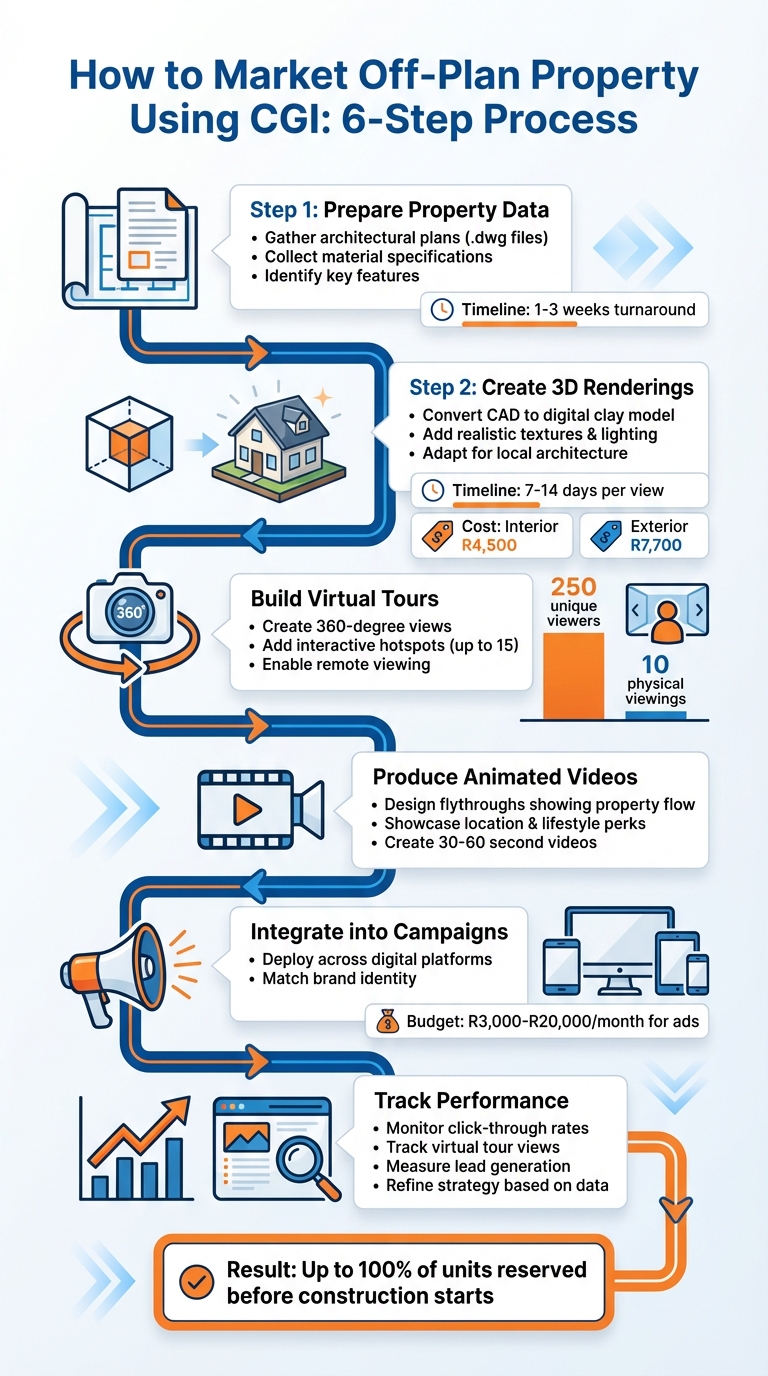
6-Step CGI Marketing Process for Off-Plan Properties in South Africa
Real Estate 3D CGI Visualization
sbb-itb-f5a6292
Step 1: Gather Property Data and Documentation
Before diving into any CGI work, it’s essential to gather all the necessary technical documents. Accurate CGI relies on precise architectural data, and without detailed plans, the final visuals might not reflect the actual build.
The typical turnaround time to kick off a CGI project after receiving plans is 1 to 3 weeks. To avoid delays, it’s best to order your CGI work as soon as planning approval is secured. This ensures your marketing materials are ready before construction begins. Landscaping plans are equally important, especially in South Africa, where outdoor living is a key feature for buyers. Details like garden layouts, outdoor furniture placements, and green spaces can help showcase the lifestyle potential of the property.
This process involves two key steps: collecting architectural plans and identifying the property’s standout features.
Collect Architectural Plans and Specifications
Start by gathering all the technical drawings and specifications from your architect. These include:
- Site plans: Provide a 3D view of communal areas and unit locations.
- Elevations: Show the external appearance of the building.
- Floorplans: Detail the interior layout.
For the best results, supply original .dwg files to maintain precise scaling. Additionally, finalise material specifications – such as windows, fixtures, textures, and finishes – before rendering begins. This ensures the CGI accurately reflects the planned design.
Once the core architectural documents are in place, shift your focus to the features that will make the property stand out.
Identify Property Features to Highlight
Not every detail needs equal attention. Focus on features that will appeal most to your target audience. These could include eco-friendly designs, contemporary aesthetics, or shared amenities. Tailoring visuals to your audience ensures the CGI communicates the lifestyle the property offers. As Property Studios explains:
"The best CGIs also sell the lifestyle that a development and its individual plots offer. They showcase the use of space and how it benefits the target audience".
For example, showcasing how sunlight fills a living area or how a garden can serve as a social space can help address buyers’ practical concerns about the property. By emphasising these elements, you can create visuals that truly resonate with potential buyers.
Step 2: Produce Photorealistic 3D Renderings
Turn your CAD drawings into a digital clay model to check massing, roof forms, and structural details before adding textures. This step is crucial for ensuring proper proportions and overall accuracy.
Once the clay model gets the green light, layer on digital textures that match the architect’s material choices – whether it’s brick, timber, cladding, or glazing. The aim is to create visuals that feel lifelike and emotionally engaging. As Property Studios puts it:
"To make an instant emotional connection with a buyer, property CGIs need to look as real as a photo".
Typically, producing a single exterior or interior view takes about 7 to 14 days. For a more complex project, like CGIs for four rooms in one house type, the process can take up to two weeks.
Add Realistic Textures and Lighting
The magic of realism comes down to two key factors: textures and lighting. Tools like vRay and 3ds Max, paired with HDRI, help replicate natural South African light, balance shadows, and create the right atmosphere.
Post-production steps include colour grading, replacing skies, and adding extra elements like local plants, people, and cars to bring the scene to life. Collaborate with designers to create mood boards that reflect the preferences of South African buyers. These visuals should align with South Africa’s architectural style and lifestyle, ensuring they resonate with the target audience.
Adapt Renderings for Local Architecture
Once the details look realistic, tweak the renderings to fit South Africa’s architectural identity. Showcase landscaped gardens with outdoor furniture to highlight the property’s potential as a social hub – perfect for summer braais, a staple of South African living. Use photomontages to blend the 3D model seamlessly into its actual location, illustrating how the property integrates with its surroundings.
For an added touch of authenticity, incorporate real drone footage or camera shots into the "window views" of the CGI, displaying the actual neighbourhood. This approach not only enhances the realism but also boosts the property’s appeal to South African buyers. These refined renderings set the stage perfectly for the immersive virtual tours that follow in the next step.
Step 3: Create Virtual Tours and 360-Degree Views
Once you’ve crafted photorealistic renderings with authentic textures and architectural details, it’s time to take things a step further with interactive virtual tours. These tours allow potential buyers to explore the property in a way that feels almost tangible. While traditional 2D floor plans often leave buyers guessing, a 3D walkthrough provides a clear sense of the space’s flow and layout – even before construction begins. This immersive experience bridges the gap between static visuals and a real-world feel.
Virtual tours do more than just showcase a property – they evoke an emotional response. Buyers can visualise themselves living in the space, which is critical for securing off-plan reservations. As Property Studios explains:
"CGI films and animations… give the buyer a chance to explore a residence as if they were there in person, all from the comforts of their own couch and before a brick has been laid".
To make these tours even more engaging, consider adding features like "Dollhouse" or "Floor Plan" views. These let users select specific rooms or areas to explore. You can also include interactive hotspots (up to 15 in standard packages), where users can click for details about specific features. For instance, interactive plot locators allow buyers to select individual plots and view corresponding 360-degree scenes. These tools can be integrated with a backend CRM system to track user activity and include direct "call to action" buttons. A great example of this technology in action is Carlsson Properties, which used virtual tours from Property Studios to successfully market and sell a development off-plan before construction had even started in 2026.
Enable Remote Property Viewing
Virtual tours open doors to remote property exploration, a game-changer in South Africa’s property market. Buyers from cities like Johannesburg, Cape Town, and Durban, as well as international clients, can explore properties from the comfort of their own homes. On average, virtual tours in South Africa attract around 250 unique viewers per property, compared to just 10 physical viewings.
Tinus Strydom of Tinus Strydom Property Group highlights their efficiency:
"The 3D virtual tour is an effective approach to property viewing and saves valuable time and money".
To maximise accessibility, host your virtual tours in the cloud. This ensures they are available anytime, anywhere, and can be easily shared across social media and other digital platforms. For an even deeper experience, make your tours "VR Ready" to support devices like Google Cardboard, Samsung Gear VR, and SmartVR. By doing so, you not only broaden your audience but also ensure your properties remain competitive in the market.
Optimise for Different Devices and Browsers
For a seamless user experience, your virtual tours should work effortlessly across PCs, smartphones, tablets, and VR headsets. All that’s needed is a modern web browser or a mobile VR headset. Since many South African buyers rely on mobile devices for property searches, ensure the tours are accessible via simple links that can be shared through messaging apps or email.
Test your tours across popular browsers like Chrome, Safari, Firefox, and Edge, as well as operating systems like Windows, macOS, iOS, and Android, to ensure consistent performance. Virtual tours not only increase engagement – boosting "hang-time" on marketing platforms by up to 300% – but also improve decision-making by 67% through interactive 3D media. Just as realistic textures and lighting elevate your renderings, ensuring smooth performance across devices builds buyer confidence. Use analytics tools to track viewer numbers and engagement, helping you fine-tune your marketing approach based on actual user behaviour.
Step 4: Develop Animated Flythroughs and Property Videos
Once you’ve created detailed renderings and virtual tours, animated flythroughs take the buyer experience to the next level. These cinematic walkthroughs guide potential buyers through the property, offering a seamless, pre-construction preview. Unlike static images or user-controlled tours, flythroughs provide a smooth, curated journey that showcases how rooms connect and flow into one another.
Design Flythroughs That Emphasise Property Flow
2D plans can often leave buyers scratching their heads. Animated flythroughs step in to bridge this gap, clearly illustrating how spaces are laid out and interconnected. As Property Studios puts it:
"Most property buyers simply see lines on a plan. They lack the experience to bring such drawings to life. They cannot imagine the space and flow of an empty or unfinished development. And that’s where hyper-real property CGIs come in."
For example, a flythrough might begin at the entrance, glide through an open-plan living area, transition into the kitchen, and then move to the bedrooms, all while highlighting key features like large windows, high ceilings, or intricate design elements. Some animations even show the virtual construction of standout features, such as a sleek kitchen, to emphasise build quality and attention to detail.
To make these flythroughs even more impactful, consider staging the interiors. This helps buyers visualise room dimensions and potential uses. Tailor the interior design to reflect the preferences of your target audience – whether it’s young professionals in Johannesburg, families in Cape Town, or retirees in coastal areas. This approach not only enhances the visual appeal but also boosts the likelihood of securing off-plan reservations.
Showcase Location and Lifestyle Perks
Animated flythroughs aren’t just about interiors – they’re also a powerful way to highlight the property’s location and lifestyle benefits. By showcasing outdoor spaces in action, you can bring the lifestyle to life. Imagine a garden set up for a summer braai, with kids playing on the grass and adults enjoying sundowners against a backdrop of mountain or ocean views.
CGI site plans can also be used to map out communal areas, the layout of the development, and the exact position of the property within the site. By integrating these visuals with real-world context – like showing nearby schools, shopping centres, or transport links – you provide buyers with a more complete picture of their potential new home. Adding interactive elements or callouts with details about materials, finishes, or local amenities can further enrich the experience.
As Property Studios perfectly summarises:
"Creative, cinematic CGI films are one of the best tools to make that connection [with the buyer]!"
Step 5: Add CGI Assets to Your Marketing Campaigns
Once your CGI visuals are polished and ready, the next step is to integrate them into your marketing efforts. By doing this strategically, you can connect with South African property buyers wherever they are searching. A unified, consistent approach across platforms ensures maximum visibility.
Deploy CGI Across Digital Marketing Platforms
Use your CGI assets across various platforms, including your development’s website, social media (Facebook, Instagram, TikTok), property portals, email campaigns, and even print media.
On your website, consider adding an interactive plot locator. This tool allows buyers to explore your CGI site plan by clicking on individual units. When a plot is selected, buyers can instantly view renderings, floor plans, and pricing information. To maximise this feature, link it to a CRM system to track user interest and capture buyer details.
Social media is another powerful channel. A 30–60 second CGI flythrough can be far more engaging than still images, capturing attention and driving interaction. Email campaigns also benefit from tailored CGI visuals. For instance, send family-oriented designs to one group and sophisticated, professional interiors to another. A great example of this approach is the Matrix development in Century City. Managed by Machete Creative, their pre-launch campaign used architecturally accurate CGI, which contributed to all 51 apartments selling out within just 45 minutes.
In competitive urban markets like Johannesburg, aerial renders are especially effective. These bird’s-eye views give buyers a clear understanding of a property’s proximity to landmarks, transport links, and amenities – key factors in high-density areas. To boost your campaign further, allocate a budget for digital ads. For South African property campaigns, monthly ad spend typically ranges from R3,000 for smaller projects to upwards of R20,000 for larger-scale developments.
This multi-channel approach lays the groundwork for aligning your CGI visuals with your overall brand identity.
Match CGI Assets with Your Brand Identity
Your CGI visuals should reflect your brand’s quality, style, and messaging. To achieve this, collaborate closely with your CGI team from the outset. Use detailed briefing forms to ensure they understand your brand’s positioning and the preferences of your target audience.
Avoid generic designs that might not resonate with your buyers. Instead, focus on creating interiors that cater to specific lifestyle needs. For example, if you’re marketing to young families in Cape Town’s southern suburbs, showcase features like a spacious nursery and a garden perfect for weekend braais. On the other hand, for professionals in Sandton, highlight home office spaces and sleek, high-end finishes.
The costs for these high-quality CGI visuals are straightforward. Interior CGI images are priced at around R4,500 each, while exterior renders start at approximately R7,700. Keep in mind that production lead times range from 1 to 3 weeks for individual renders, with full-scale developments taking up to 2 months to complete. As PropertyRender.co.za aptly puts it:
"A well-executed project marketing render is more than an image – it is a strategic marketing tool that drives interest, accelerates sales, and enhances project credibility".
Step 6: Measure and Improve Campaign Performance
After setting up your multi-platform CGI marketing efforts, the next step is to measure how well they’re performing and refine your approach. Tracking results is crucial for fine-tuning strategies. With modern analytics tools, you can identify what’s working and what needs adjustment.
Track Engagement and Conversion Metrics
Keep an eye on key metrics like click-through rates, social engagement, lead generation, and virtual tour views to evaluate the effectiveness of your CGI visuals. Since CGI imagery often leads to better engagement, compare your metrics before and after implementation. For platforms like Facebook and Instagram, focus on social engagement – things like likes, shares, and comments – especially for standout visuals like aerial renders.
For lead generation, track actions such as registrations of interest, phone calls, emails, and website contact form submissions. If you’re using an interactive plot locator with a CRM system, leverage it to gain deeper insights into buyer behaviour. When it comes to virtual tours, monitor view counts and how long users stay engaged. Make sure to test performance across all major devices and browsers to avoid any technical hiccups.
Ultimately, sales and conversion rates are your most critical metrics. Look at how many off-plan reservations are being made and how quickly buyers are moving from inquiry to purchase. Since CGI is designed to speed up this process, tools like real-time analytics dashboards can be incredibly helpful. These dashboards can show metrics like views, unique visitors, visit duration, and even heat maps of where users are clicking. These insights are invaluable for refining your strategy.
Apply Analytics to Refine Marketing Strategies
Once you’ve gathered performance data, use it to make smart adjustments. If your CGI assets aren’t performing as expected, check their realism. South African buyers, in particular, expect images that are almost indistinguishable from photographs. If your renders look too artificial, it could hurt your conversion rates. Identify which units are in high demand by observing which areas of your 3D site plan get the most activity, and adjust your marketing priorities accordingly.
Pay attention to device and browser reports to ensure your CGI assets are working smoothly on the platforms your audience prefers. For example, if most buyers are using mobile devices but your virtual tours are sluggish on phones, you risk losing engagement. Automating reports can also help keep stakeholders updated with the latest insights.
If engagement levels are low, it might be time to tweak your targeting. For instance, if data shows that users aren’t exploring garden or communal area renders, shift your messaging to emphasise social features like braai areas or family-friendly spaces. Similarly, track which hotspots in your 360-degree tours are getting the most clicks. This data can reveal buyer priorities and help you refine your marketing materials to better align with their interests.
Legal and Ethical Requirements for CGI Marketing in South Africa
After crafting captivating CGI visuals and monitoring their performance, it’s essential to ensure your marketing efforts align with South African legal standards. Property advertising in South Africa is regulated by the Advertising Regulatory Board (ARB) and the Consumer Protection Act (CPA) of 2008. Missteps here can result in enforcement actions, which no marketer wants to face.
The ARB Code of Advertising Practice lays down clear expectations: advertisements must be "legal, decent, honest and truthful" and created with consumer responsibility in mind. This applies directly to CGI visuals – your renders must not mislead buyers, whether through omission, ambiguity, or exaggerated claims. For instance, if your CGI highlights specific views, dimensions, or features, you must back these up with documented evidence, such as architectural plans or site surveys, before the ad goes live.
Ensure CGI Visuals Are Accurate and Truthful
It’s vital to separate artistic impressions from factual claims. Under the CPA, developers are prohibited from marketing properties in ways that are false, misleading, or deceptive about the property’s nature or benefits. This means your CGI must accurately represent what buyers will receive. For example, if your render features a particular kitchen finish or a specific view from a balcony, these details must align with approved specifications.
"All claims – whether express, direct or indirect – that are capable of objective substantiation must be supported by documentary evidence which advertisers must have obtained prior to placing the ad." – Jenny Pienaar, Partner, Adams & Adams
Make it clear when elements in your CGI, like furniture or landscaping, are not part of the sale. Transparency is key. Include a detailed specification schedule with your CGI marketing materials so buyers understand exactly what they’re purchasing. Keep your evidence – such as site surveys, material lists, and architectural plans – up to date to defend the accuracy of your visuals if questioned.
Accuracy in your renders is just one aspect. Adhering to formal advertising standards is equally critical.
Follow South African Property Advertising Regulations
Complying with property advertising regulations not only protects your campaign from legal pitfalls but also builds trust with potential buyers. For instance, if you’re using CGI in social media or influencer campaigns, make sure to label the content as "Ad" or "Sponsored" to meet the requirements of ARB Appendix K. For major campaigns, seeking pre-approval from the ARB can help you avoid costly errors.
Additionally, if you’re gathering leads through virtual tours or interactive tools, ensure compliance with the Protection of Personal Information Act (POPIA) and the Direct Marketing Association of South Africa (DMASA) Code. The Information Regulator, active since late 2023, has the authority to impose hefty fines for non-compliant direct marketing practices.
The risks of non-compliance are substantial. ARB members must immediately remove any advertising found to be in violation, and major media platforms might refuse to run your ads following a negative ruling. Furthermore, if a government department deems your marketing misleading, they can issue directives, and ignoring these can lead to criminal penalties. By prioritising transparency and accuracy, you not only protect your business but also strengthen buyer confidence in your CGI marketing efforts.
Conclusion
Selling off-plan properties in South Africa has come a long way – no more relying on buyers to interpret technical blueprints. By following the six steps outlined in this guide, you can turn architectural concepts into stunning photorealistic visuals that sell more than just buildings. In competitive markets like Cape Town and Johannesburg, CGI has shifted from being a "nice-to-have" to an essential tool. Developers who fail to embrace it risk losing ground. This technology closes the imagination gap, speeds up off-plan sales by securing reservations before construction begins, and provides clarity for lenders and planning authorities. In some cases, it can even result in 100% of units being reserved before construction starts. As Valerie Adams from ArchiCGI aptly says:
"Good CGI for property developers brings a space to life before there’s even a shovel in the ground".
CGI doesn’t just accelerate sales – it builds trust with both buyers and stakeholders.
To make the most of this opportunity, start your CGI process as soon as you get project approval. Provide a detailed brief with CAD files, material samples, and specific view angles to ensure smooth delivery – timelines typically range from up to 2 weeks for four interior rooms to up to 2 months for large-scale projects. Avoid generic designs; instead, customise interiors to suit your target buyers. Finally, integrate CGI into all your marketing channels to deliver a consistent and engaging message. By combining these steps into a well-rounded strategy, you’ll connect with South African buyers and drive off-plan sales effectively.
FAQs
What should I send a CGI studio to start?
When starting with a CGI studio, it’s essential to share detailed project information. This includes architectural plans, floor plans, elevations, and any specific design details you’d like visualised. Providing high-quality blueprints and reference images helps ensure the 3D renderings are precise and realistic.
Be clear about your preferred style, the scope of the project, and any key features or materials you want to emphasise. This clarity helps the studio align with your vision and deliver results that meet your expectations.
How do I keep CGI legal under the CPA and ARB rules?
To align with the Consumer Protection Act (CPA) and the Advertising Regulatory Board (ARB) rules in South Africa, it’s essential to ensure that CGI visuals are accurate and not misleading. Always label these images clearly as conceptual or illustrative to avoid confusion with actual photographs.
Steer clear of overstating features such as the size, layout, or finishings of a property. Transparency is crucial – let potential buyers or clients know that CGI representations might differ from the final development. Adhering to truthful advertising standards is non-negotiable, and when in doubt, consult legal guidelines to avoid potential pitfalls.
Which CGI format converts best: renders, tours or videos?
When it comes to CGI formats, hyper-realistic 3D renders tend to deliver the best results. These renders allow developers to sell or secure reservations for units even before construction begins. Data highlights their impact: faster sales, higher price points, and more engaged buyers. While virtual tours and videos offer immersive experiences, static, photorealistic renders consistently perform the strongest in South Africa’s property market.
Related Blog Posts
- How Developers Use Branding in Off-Plan Marketing
- Architectural Rendering Cape Town: Exterior & Interior CGI for Developers
- 3D Rendering for New Developments in South Africa (Sell Units Before Construction)
- Estate & Gated Community CGI Renders: Best Practices for SA Developers

