

3D visualisation is reshaping how properties are marketed in South Africa’s highly competitive real estate landscape. By offering lifelike renders, virtual staging, and interactive walkthroughs, this technology helps developers and agents attract more buyers, shorten sales cycles, and showcase properties – whether under construction or ready for occupancy – in a way that resonates with today’s tech-savvy audience.
Key Takeaways:
- 3D Renders: Perfect for pre-sales, these visuals bring unbuilt properties to life, showcasing details like textures, lighting, and layouts.
- Virtual Staging: Transforms empty spaces into furnished homes tailored to South African lifestyles, appealing to different buyer groups.
- Interactive Walkthroughs: Allows buyers, including international investors, to explore properties remotely, reducing site visits and speeding up decisions.
With trends like sectional title developments, a growing demand for affordable housing, and interest from foreign buyers, standing out is harder than ever. 3D visualisation addresses challenges like limited buyer engagement, long decision cycles, and the difficulty of marketing off-plan properties. It’s a must-have for property professionals looking to thrive in this evolving market.
South Africa’s Property Market Trends and Challenges
Current Trends in South Africa’s Property Market
South Africa’s property market is evolving, with noticeable shifts shaping buying patterns and development strategies. In urban areas, sectional title developments have become increasingly popular. These properties not only provide buyers with a more affordable entry point but also allow developers to maximise returns on scarce land.
The demand for affordable housing is also on the rise, driven by government programmes and a growing number of first-time buyers. Developers are responding by creating quality homes that cater to these emerging needs.
Another trend gaining momentum is the appeal of secondary cities. With flexible work arrangements becoming more common, many people are exploring areas outside the traditional metropolitan hubs. This shift is creating fresh opportunities for those willing to tap into less conventional markets.
Foreign buyers, particularly in the Western Cape, continue to influence the market. The favourable exchange rate and the region’s lifestyle appeal attract international investors, adding a unique dynamic to the property landscape.
Meanwhile, the luxury property market remains steady. High-end homes in sought-after neighbourhoods are still in demand, with buyers expecting top-tier marketing efforts, including sophisticated digital campaigns.
While these trends create exciting opportunities, they also bring unique challenges for property professionals.
Challenges Facing Property Professionals
Navigating these changes isn’t without its hurdles. Off-the-plan properties, for instance, present a unique challenge. Traditional sales techniques often struggle to showcase their potential, leaving buyers hesitant.
In competitive markets, standing out is becoming increasingly difficult. Without engaging and visually striking presentations, properties risk being overlooked in a sea of options. Buyers now expect more than static photos or basic floor plans – they want immersive digital experiences.
Infrastructure issues, such as power reliability, water availability, and internet connectivity, are also under the spotlight. Marketing efforts now need to strike a balance between highlighting practical features and presenting an appealing lifestyle.
Financing remains another obstacle. Strict lending criteria and fluctuating interest rates mean buyers are more cautious, often taking extra time to evaluate their options. This extended decision-making process can lengthen the sales cycle, making it crucial for properties to clearly communicate their value.
The rental market faces its own set of challenges, as tenants are becoming more selective. Location, amenities, and overall value are key factors, and well-crafted marketing materials are essential to demonstrate a property’s rental potential and lifestyle benefits.
Lastly, time constraints are reshaping how properties are showcased. Virtual previews have become a vital tool, offering busy buyers and renters a chance to explore properties digitally before committing to an in-person viewing. High-quality digital presentations are no longer optional – they’re essential for staying competitive in today’s market.
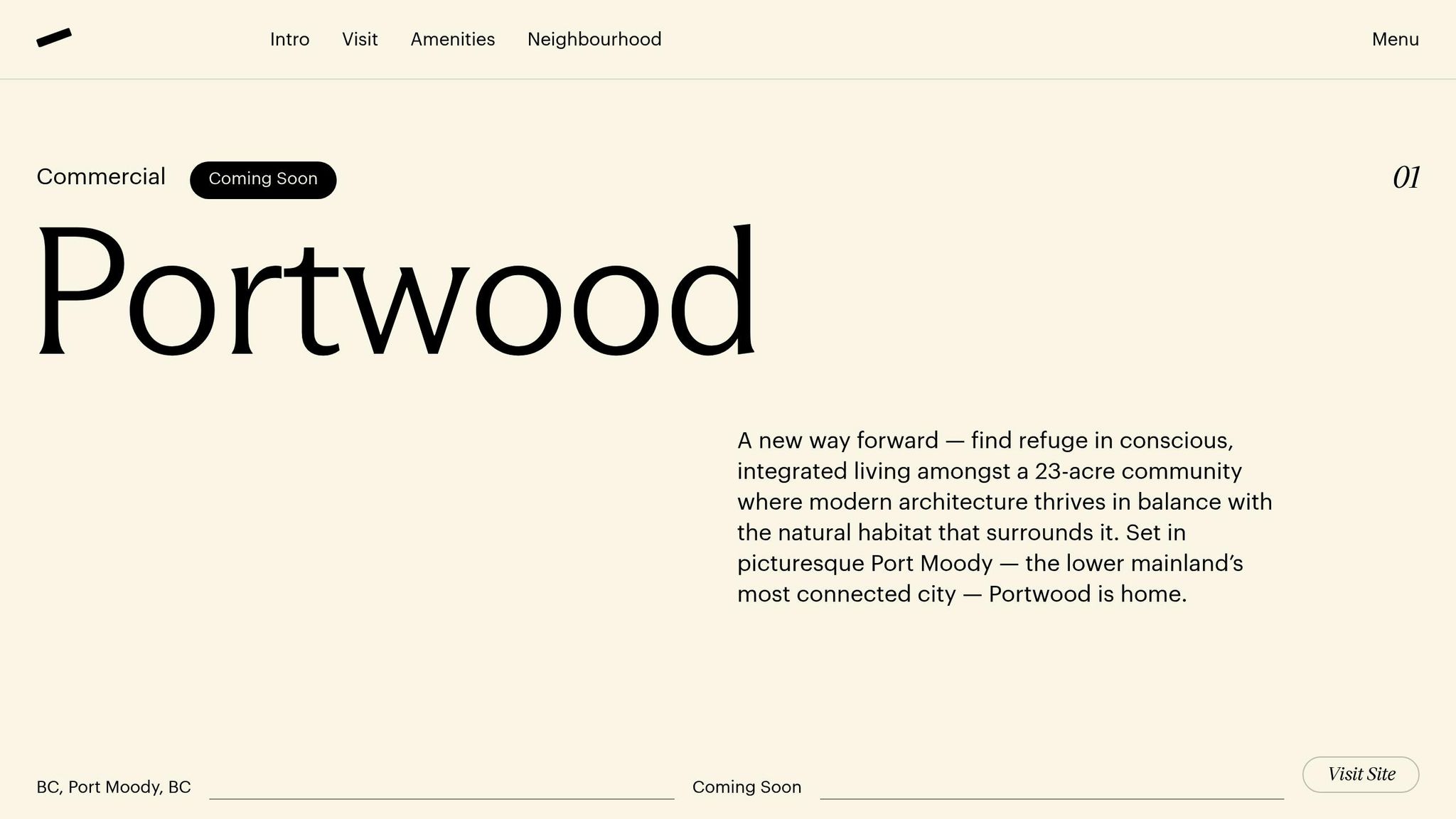
3D Marketing Video Rendering for Real Estate Development Portwood
Why 3D Visualisation Matters for Property Marketing
The property market in South Africa faces unique challenges that call for modern, effective marketing strategies. Traditional methods often fall short, especially when it comes to showcasing properties that are either under construction or completely vacant. This is where 3D visualisation steps in, offering developers and agents the ability to present properties in a way that resonates with today’s buyers. It transforms abstract ideas into vivid, realistic visuals, helping buyers connect emotionally with properties and make confident purchasing decisions. Below, we’ll delve into the specific techniques that make 3D visualisation a game-changer.
Photorealistic Renders: Bringing Unbuilt Properties to Life
Selling off-plan properties has always been a tough task in South Africa. Buyers are understandably hesitant to commit to something they can’t fully picture. That’s where photorealistic 3D renders come in. These stunning visuals give buyers a detailed, lifelike view of future homes, creating an emotional connection that traditional blueprints simply can’t achieve.
These renders go beyond the basics, capturing everything from the texture of walls to the way sunlight filters through the windows. They provide a complete visual representation of a property, even before construction begins. Developers can use these tools to highlight key features, showcase layouts, and illustrate the potential of a space in ways that standard architectural drawings or photographs never could.
For buyers, this means they can imagine themselves living in the property without needing to visit a construction site multiple times. By offering this level of detail and realism, 3D renders allow under-construction properties to compete on equal footing with fully built homes.
Virtual Staging: Tailoring Interiors to Local Lifestyles
While photorealistic renders focus on unbuilt properties, virtual staging transforms empty spaces into inviting, relatable interiors. Empty rooms often leave buyers guessing about how a space could work for them. Virtual staging eliminates that guesswork by showcasing fully furnished spaces that reflect South African design trends and lifestyle needs.
For instance, an open-plan living area could be staged to highlight its suitability for indoor-outdoor entertaining, a popular feature in South African homes. Developers can also use this technique to address seasonal needs, showing how a space might feel cosy in winter or breezy in summer. Virtual staging’s adaptability allows developers to target different buyer groups with tailored designs, making properties more appealing to a broader audience.
Interactive Walkthroughs and Enhanced Floor Plans
Static images and standard floor plans often leave buyers with unanswered questions about a property’s layout and flow. Interactive walkthroughs and detailed floor plans solve this problem by offering immersive experiences that keep buyers engaged.
These tools are especially valuable in South Africa’s international property market, where foreign buyers – particularly in regions like the Western Cape – can explore properties remotely. This reduces the need for physical site visits, speeds up decision-making, and accelerates sales. Interactive floor plans go a step further by including clickable elements that reveal room dimensions and features, giving buyers a comprehensive understanding of the property upfront.
The demand for 3D rendering services is growing in cities like Cape Town and Johannesburg, reflecting the increasing recognition of these tools’ benefits. As Virtual Reality (VR) and Augmented Reality (AR) technologies continue to gain traction, these interactive experiences are becoming even more engaging, allowing buyers to explore properties like never before – all without leaving their homes.
How to Use 3D Visualisation in Your Marketing
Building on the trends and challenges in the property market, let’s explore how to make 3D visualisation a core part of your marketing strategy. The trick lies in using it at the right time, creating content that resonates with your audience, and blending it seamlessly into your existing campaigns.
When to Use 3D Visualisation in Your Project
Timing is everything when it comes to 3D visualisation. Using it at the right stage of your project can significantly enhance your marketing efforts.
Early-stage concept development is an excellent time to introduce 3D renders. These photorealistic visuals can help you secure investor support and generate interest before construction begins. They’re particularly effective for presenting your vision to stakeholders who need a clear picture of the final product.
Another key moment is during pre-sales campaigns. At this stage, potential buyers are forming emotional connections with properties they can’t yet physically see. For instance, you could virtually stage a two-bedroom apartment to appeal to young professionals during the week and then restage it for families over the weekend. This flexibility allows you to cater to different buyer groups effectively.
When you reach the project launch phase, it’s time to pull out all the stops. Interactive walkthroughs, detailed floor plans, and multiple render angles become essential tools. International investors and remote buyers, in particular, depend on these digital experiences to make informed decisions.
Don’t overlook post-construction marketing. Even finished properties can benefit from 3D visualisation, especially if they’re empty or need to showcase renovation possibilities. Virtual staging can turn a vacant unit into an inviting living space that feels aspirational to potential buyers.
Once you’ve determined the timing, the next step is to customise your visual content for your audience.
Creating Visual Content for Your Target Audience
Different buyers have different preferences, and tailoring your 3D content to match these preferences is crucial for success.
Local buyers often appreciate renders that reflect South African lifestyles – think indoor-outdoor living, braai areas, and layouts designed for extended family gatherings. International investors, on the other hand, are drawn to clean, modern staging that highlights rental potential and optimised occupancy. First-time buyers benefit from interactive floor plans that make it easier to understand how spaces can be used. Meanwhile, luxury buyers expect intricate details, like renders showing how natural light moves through a home at different times of the day.
For lifestyle-focused local buyers, consider showcasing outdoor areas in different seasons – perfect for summer braais or warm winter gatherings. International investors might prefer neutral, versatile designs that appeal to tenants. First-time buyers may need educational elements, like clickable floor plans that explain spatial relationships and practical layouts.
Adding 3D Tools to Your Marketing Strategy
To make the most of 3D visualisation, it’s essential to integrate it across your marketing channels.
In digital advertising, high-quality 3D renders often outperform standard construction photos. Platforms like Instagram and Facebook thrive on eye-catching visuals, making photorealistic renders a great way to grab attention.
Interactive tools also enhance on-ground sales efforts. Embedding floor plans into listings improves engagement, while virtual staging galleries – where users can toggle between interior design options – encourage visitors to spend more time exploring your properties.
Email marketing can also benefit. Instead of sending text-heavy updates, include visual progress comparisons with updated renders. You can even segment your audience by sending modern staging options to younger buyers and more traditional designs to older demographics.
For sales presentations, 3D tools like interactive walkthroughs on tablets can provide immersive experiences during meetings. Virtual reality headsets, though still emerging in South Africa, offer a cutting-edge way to make your properties unforgettable.
Even in the digital age, print materials remain relevant. High-quality renders look stunning in brochures, billboards, and newspaper ads. Just ensure your digital and print materials align to create a consistent brand experience.
sbb-itb-f5a6292
Success Stories: 3D Visualisation in Action
3D visualisation is changing the game for property developers and agents across South Africa. By adopting these tools, they’re seeing a noticeable boost in buyer engagement, quicker sales, and lower marketing expenses.
More Buyer Interest Through Virtual Staging
Virtual staging is a powerful tool that’s helping properties sell 73% faster while attracting up to 40% more online views. A recent study found that 82% of agents believe staging helps buyers imagine the space as their own, and staged properties are 41% more likely to get in-person visits.
One of the standout benefits of virtual staging is its flexibility. A single property can be styled in multiple ways to appeal to different audiences. For instance, a sleek, modern look might attract young professionals in Sandton, while a cosy, family-friendly design could resonate with buyers in suburban Cape Town. This versatility allows developers to experiment with styles without the hassle and expense of physically staging a property.
Even more compelling, 99% of sellers agree that virtual staging gives them a competitive edge. This often translates into smarter pricing strategies and more confident marketing efforts. Interactive walkthroughs build on this success, taking buyer engagement to the next level and accelerating sales for off-the-plan properties.
Faster Off-the-Plan Sales with Interactive Walkthroughs
While virtual staging enhances how buyers perceive a property, interactive walkthroughs take things further by immersing them in the space. These virtual tours are particularly effective for off-the-plan sales, helping international investors and remote buyers explore properties without needing to be there in person. Listings with virtual tours get 87% more views compared to those without, making them a must-have in today’s competitive market.
This technology solves a key challenge in off-the-plan sales: showing buyers what a property will feel like before it’s built. Interactive walkthroughs let potential buyers explore layouts, understand spatial flow, and get a real sense of the property – all from their computer or phone. For international buyers who can’t visit South Africa during the sales process, this is a game-changer.
The results speak for themselves. AI-staged listings see a 72% jump in online traffic and a 44% increase in serious inquiries. These properties spend up to 36% less time on the market and often fetch prices up to 22% higher.
Cities like Cape Town and Johannesburg are leading the way, with architectural visualisation reshaping how properties are designed, marketed, and sold in South Africa’s dynamic real estate market. The combination of higher engagement, quicker sales, and better pricing makes interactive walkthroughs an essential tool for developers. When buyers can fully experience a property – even before it exists – they’re more likely to commit and pay a premium for that confidence.
How to Choose the Right 3D Visualisation Partner
To maximise the benefits of 3D visualisation in property marketing, selecting the right partner is key. A well-suited 3D visualisation provider can make all the difference in showcasing your properties effectively, especially within South Africa’s diverse property market. This builds on the earlier discussion about how 3D visualisation enhances buyer engagement and drives marketing success.
Key Considerations
When evaluating potential partners, keep these essential factors in mind:
Local Market Knowledge
Your chosen provider should have a deep understanding of South Africa’s property landscape, including regional architectural styles and buyer preferences. For instance, a Sandton penthouse requires a different design approach compared to a family home in Stellenbosch. Additionally, outdoor living spaces should reflect the appeal of South Africa’s climate.
Technical Expertise and Service Range
Look for a provider that offers a comprehensive suite of services, such as photorealistic renders, virtual staging, interactive walkthroughs, and VR solutions. This ensures a seamless and consistent marketing strategy without the hassle of coordinating between multiple vendors.
Turnaround Times and Project Management
Timely delivery is crucial, especially when working under tight deadlines. Confirm their delivery timelines and revision processes upfront. A reliable provider will have clear systems in place for feedback and amendments to keep your project moving smoothly without compromising on quality.
Portfolio Quality and Relevant Experience
A provider’s portfolio is a direct reflection of their capabilities. Review their previous work, paying close attention to projects similar to yours in terms of scale, style, and target audience. A versatile portfolio that spans residential, commercial, and mixed-use developments is a good indicator of their expertise.
Pricing and Value for Money
Evaluate their pricing structure to ensure it aligns with your budget and expected returns. Compare fixed packages and custom quotes by considering the overall value, including revision allowances, file formats, and ongoing support.
Service Plans Comparison Table
To help you decide, here’s a comparison of three service plans tailored to different project needs:
| Plan Features | Basic Plan | Professional Plan | Enterprise Plan |
|---|---|---|---|
| 3D Renders | ✓ Standard quality | ✓ High-resolution | ✓ Ultra-high resolution |
| Virtual Staging | ✓ Basic furniture sets | ✓ Multiple style options | ✓ Custom styling + multiple variations |
| Floor Plans | ✓ 2D basic layouts | ✓ Enhanced 2D + 3D options | ✓ Interactive 3D floor plans |
| VR Solutions | ✗ Not included | ✓ Basic VR walkthroughs | ✓ Advanced VR + AR capabilities |
| Revisions | Limited to 2 rounds | Up to 4 revision rounds | Unlimited revisions |
| Additional Services | Renders only | Photography integration | Comprehensive marketing support |
| Delivery Time | 7-10 business days | 5-7 business days | 3-5 business days |
| Best For | Single properties, small developments | Multi-unit developments, established agents | Large-scale developments, comprehensive marketing campaigns |
- The Basic Plan is ideal for property owners or agents trying 3D visualisation for the first time. It offers essential rendering and staging services without the added complexity of advanced features.
- The Professional Plan is a great fit for established developers and agencies. It provides high-quality visualisations with reasonable flexibility for revisions, along with VR capabilities that can attract international buyers.
- The Enterprise Plan is designed for large developments and organisations focused on high-impact marketing. Its unlimited revisions and extensive marketing support make it perfect for premium developments where visual appeal directly affects sales.
When choosing a plan, consider your typical project size, target audience, and marketing budget. For example, a luxury development in Clifton might benefit from the Enterprise Plan’s advanced features, while a suburban townhouse project could achieve excellent results with the Professional Plan.
Conclusion: Getting Started with 3D Visualisation
The property market in South Africa is more competitive than ever, making it crucial for developers and agents to find ways to stand out. One powerful solution? 3D visualisation. This technology is transforming property marketing, from photorealistic renders that bring unbuilt developments to life, to virtual staging that helps buyers imagine homes suited to their unique lifestyle. These tools not only meet the growing demands of the market but also redefine how properties are marketed.
Interactive walkthroughs, virtual reality solutions, and staged renders are proven to generate more enquiries and speed up sales, especially for off-the-plan developments. For developers, these tools offer a significant edge over traditional marketing approaches, delivering faster results and stronger engagement.
If you’re ready to start using 3D visualisation, the first step is to assess your property portfolio. Identify which properties need a boost in presentation – perhaps a high-end development or a project requiring a more immersive experience. Next, think about your audience and choose the right level of service. This could range from simple, high-quality renders for smaller projects to fully immersive solutions for large-scale developments.
As South Africa’s property market continues to grow, adopting 3D visualisation now can give you a competitive advantage. Platforms like 3D Rendering Services South Africa offer tailored solutions, including world-class visuals, local support, and streamlined quoting, all designed to meet the specific needs of the South African market. Take the leap today and elevate your property marketing strategy with professional 3D visualisation services.
FAQs
How does 3D visualisation address the challenges of marketing off-plan properties in South Africa?
3D visualisation is transforming how property developers and agents in South Africa market off-plan properties. By creating lifelike, detailed representations of homes and developments long before construction begins, this technology bridges the gap between imagination and reality. With photorealistic renders and virtual walkthroughs, potential buyers can picture the final product, making the decision-making process far more confident and less uncertain.
What makes this approach so effective is its ability to highlight key features like layout, finishes, and overall design in a way that truly engages the viewer. This not only speeds up pre-sales but also attracts interest from both local and international buyers. By delivering an immersive experience, 3D visualisation addresses the shortcomings of traditional marketing techniques, helping developers carve out a space in South Africa’s highly competitive property market.
What makes virtual staging a powerful tool for property marketing in South Africa?
Virtual staging has become a game-changer for property marketing in South Africa, offering a smart and affordable way to make listings shine in a competitive market. By skipping the need for physical furniture and decor, it cuts costs while giving potential buyers a clear vision of what a space could look like.
What makes virtual staging so powerful is its ability to create tailored, lifelike visuals that resonate with local styles and preferences. It doesn’t just make listings more appealing – it also speeds up the marketing process. With quick updates to property images, sellers and agents can grab buyers’ attention faster and encourage quicker decisions. In a market where first impressions count, virtual staging ensures your property stands out and leaves a memorable impression.
How can 3D visualisation help attract international buyers to properties in the Western Cape?
3D visualisation plays a crucial role in attracting international buyers by providing lifelike, immersive visuals that make exploring properties feel almost as real as being there in person. For buyers who can’t physically visit, this technology offers a reliable way to experience a property, helping them feel more confident and assured in their decisions.
With features like virtual walkthroughs and highly detailed renders, international investors can remotely evaluate a property’s layout, design, and surroundings with ease. These tools effectively eliminate geographical barriers, opening up opportunities to connect with a broader audience. This is particularly beneficial in high-demand areas like the Western Cape, where showcasing properties effectively can speed up the sales process significantly.
Related Blog Posts
- Why South African Developers Are Switching to 3D Renders in 2025
- How 3D Renders Help You Sell Property Faster – Case Studies from SA
- 3D Floor Plans: A Must-Have for Modern Property Listings in SA
- How 3D Renders Help Developers in Gauteng, Cape Town & Durban Close Deals Faster

